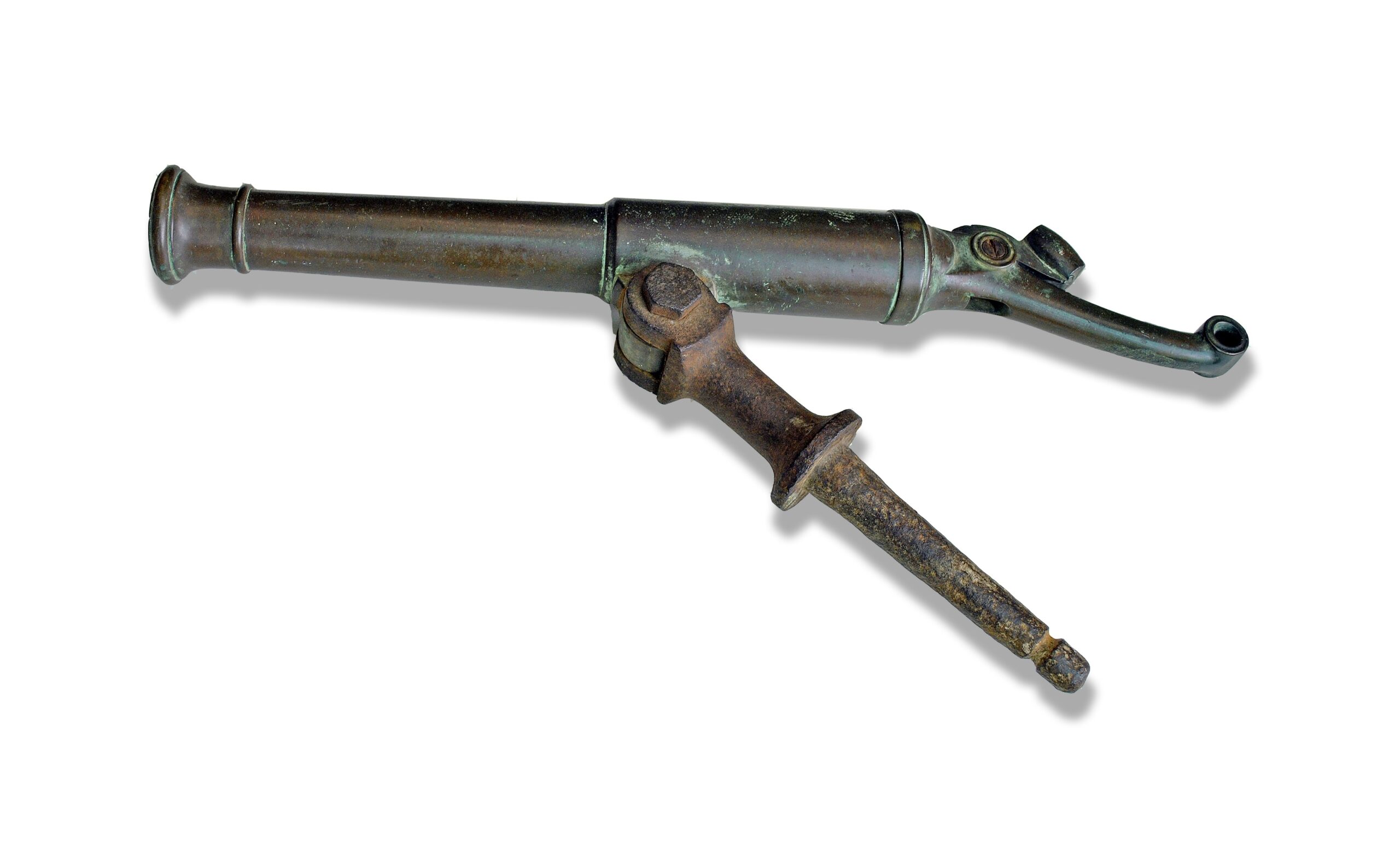
A bronze swivel gun in the Queensland Maritime Museum (QMM) collection could be all that survives of the HMS Rattlesnake, commissioned in 1846 to chart the shoals of the Barrier Reef and create the first detailed charts of the Papua and New Guinea coasts.
Europe’s maritime exploration of Australia effectively began in 1606 when the crew of the Dutch ship Duyfken made the first undisputed sighting of the southern continent. There followed, throughout the next two centuries, a steady succession of Dutch, French, Spanish and English explorers, some having even argued the case for Portugese arrivals. With each arrival new European names were added to prominent geographical features, presaging the arrival of the first permanent European settlers in the late eighteenth century. The maritime exploration of Australia continued thereafter, albeit, mostly under the aegis of the Royal Navy and colonial administrations. Rattlesnake’s mid-century survey of the north-eastern coastline (and adjacent reefs), and the island’s to Australia’s north, was the last undertaken by a vessel flying the British ensign. While the ship’s log, and several crew diaries still survive, only one relic of the HMS Rattlesnake is known to survive – a bronze swivel gun.
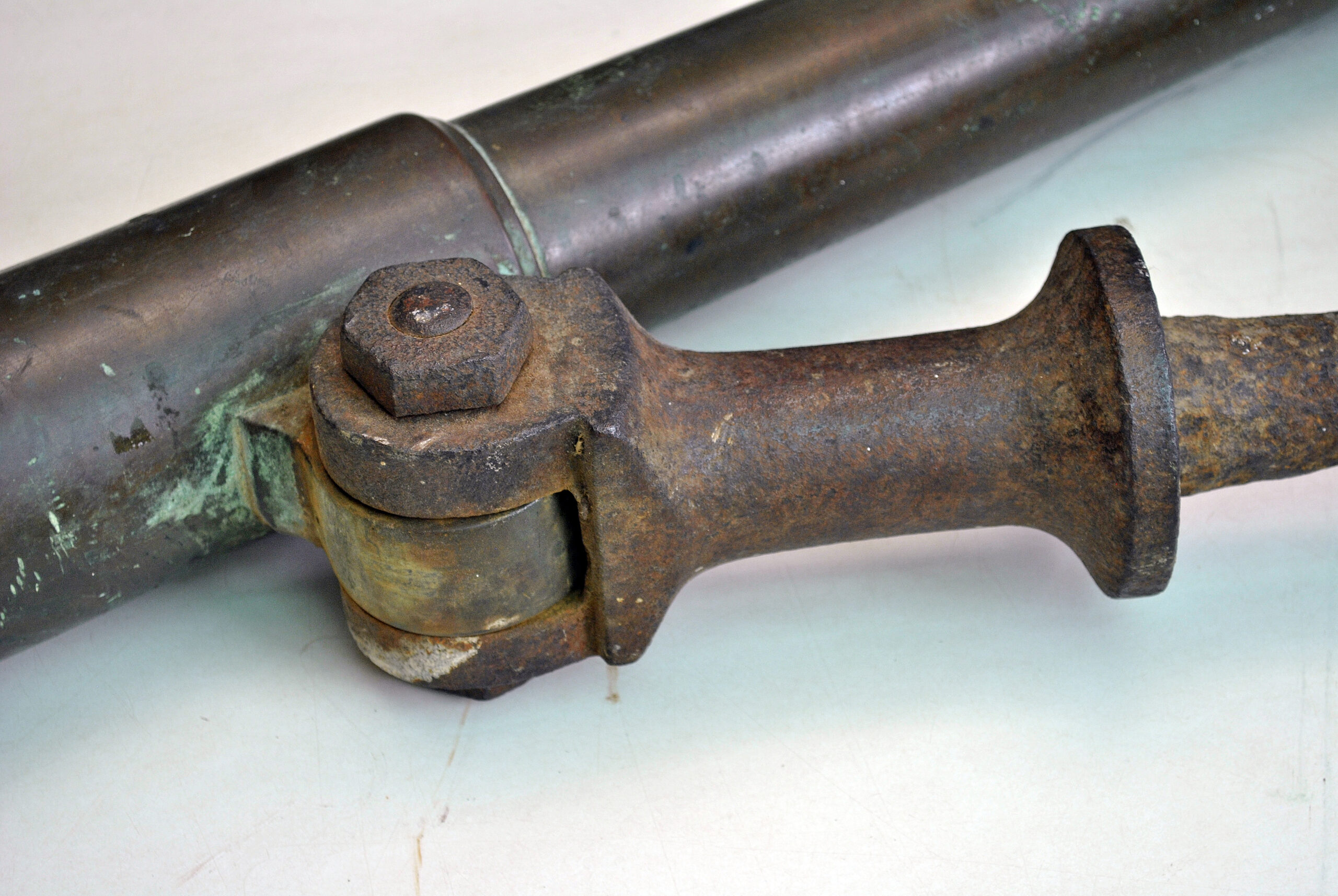
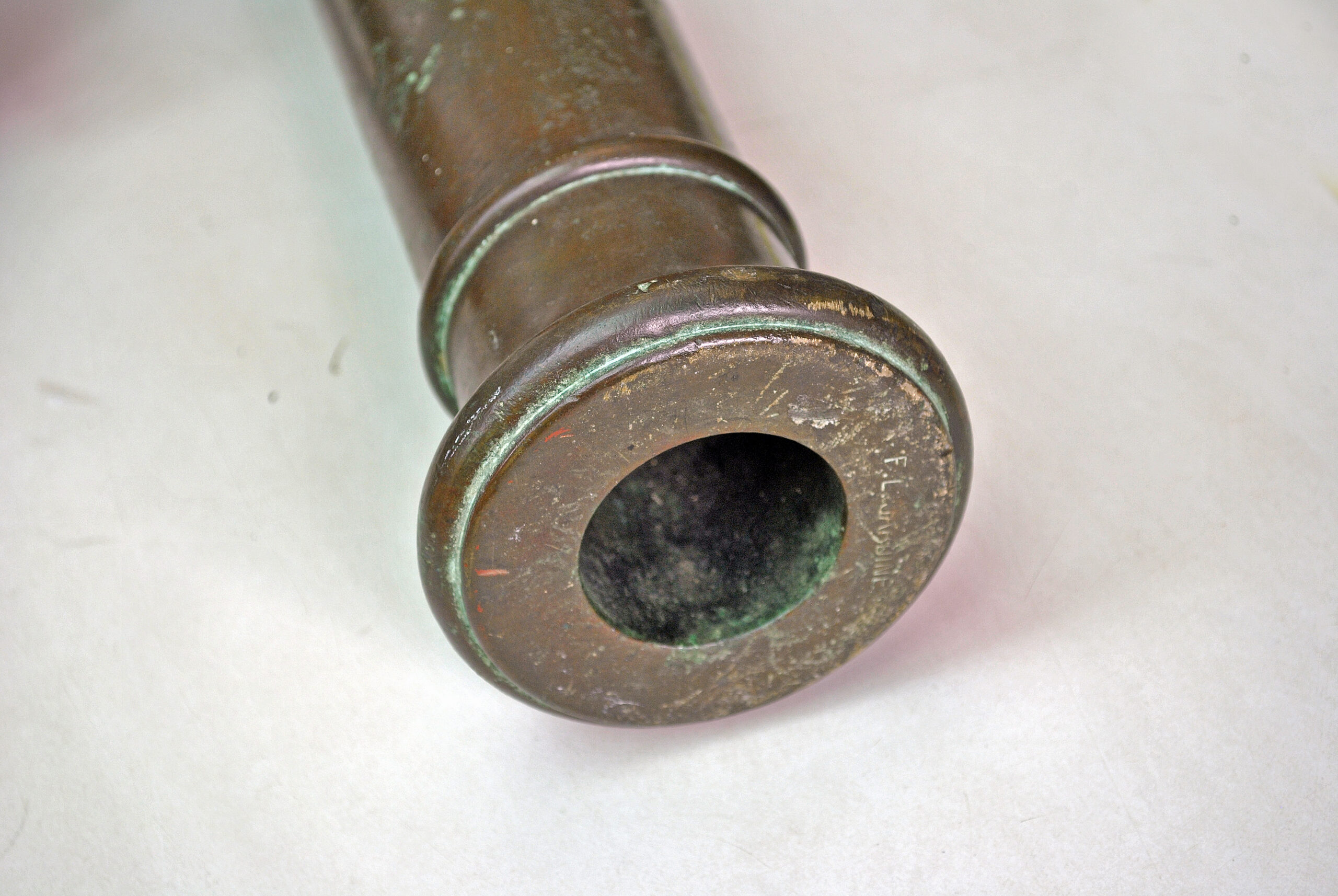
This relic was for many years part of the Toowoomba Historical Society collection, which is where this writer first saw it in 1986. It was then referred to as the Jardine gun, this name deriving, presumably, from the ‘F.L. Jardine’ marking stamped twice into the gun’s metal (once under the gun between its handle and swivel mount, and again on the end of the barrel). Also cast into the upper surface, near the percussion nipple are the worn numerals ‘9-0’. The gun has an overall length (including handle) of 915 mm (36 inches), with a bore diameter of 43 mm (1¾ inches). Its maximum diameter is 90 mm (3¾ inches).
Society records also describe what appears to be a small circle with ‘T’ in the centre. While the tag attached to the gun attributes it to HMS Rattlesnake, Society records shed no further light on how or when it was acquired. Although the gun’s provenance remains incomplete, circumstantial evidence suggests it could well have belonged to the well known Queensland pastoralist and explorer Francis Lascelles Jardine (1841-1919), whose role in the frontier massacres is well documented.1 One revealing published account describes preparations at Jardine’s Cape York cattle station, Bertiehaugh, ahead of an expected attack by natives … “and so he loaded up the formidable artillery, amounting to fifty odd muskets and rifles and a 12lb.swivel gun, and arranged them all in order inside the loop holed building, and here, with the three other men employed on the station, he stood ready.”2 This certainly lends weight to the possibility that the QMM gun was formerly owned by Francis Jardine.
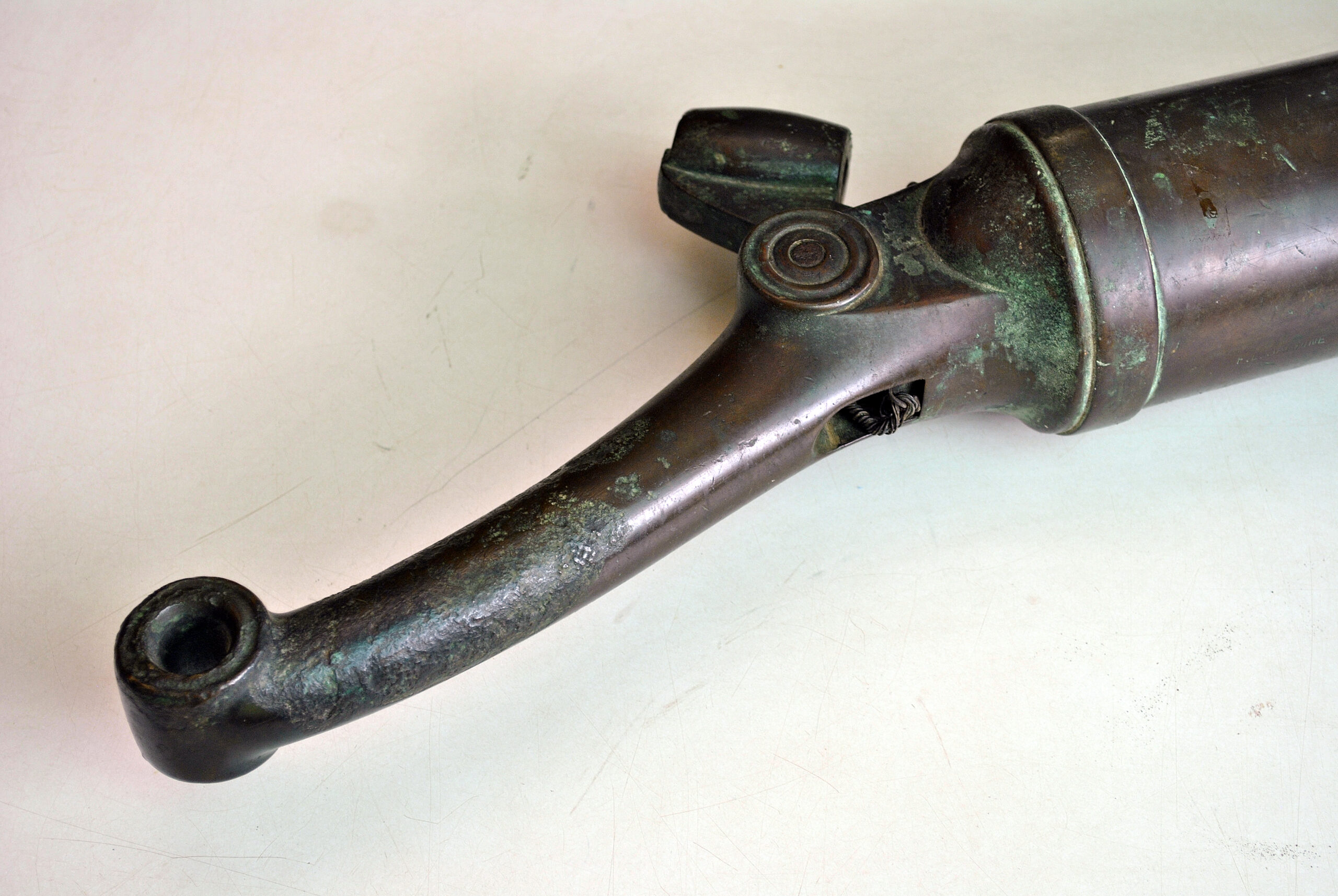
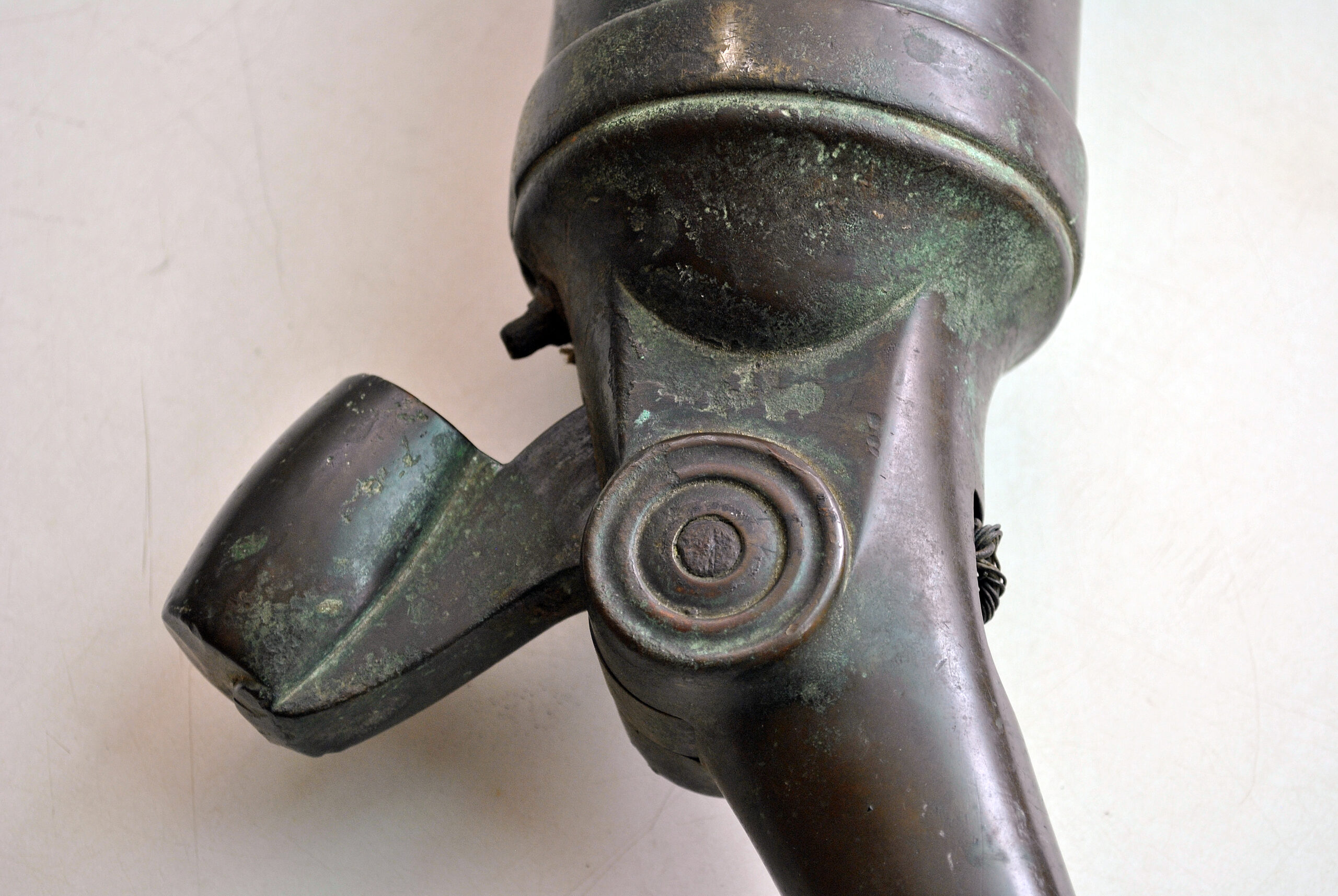
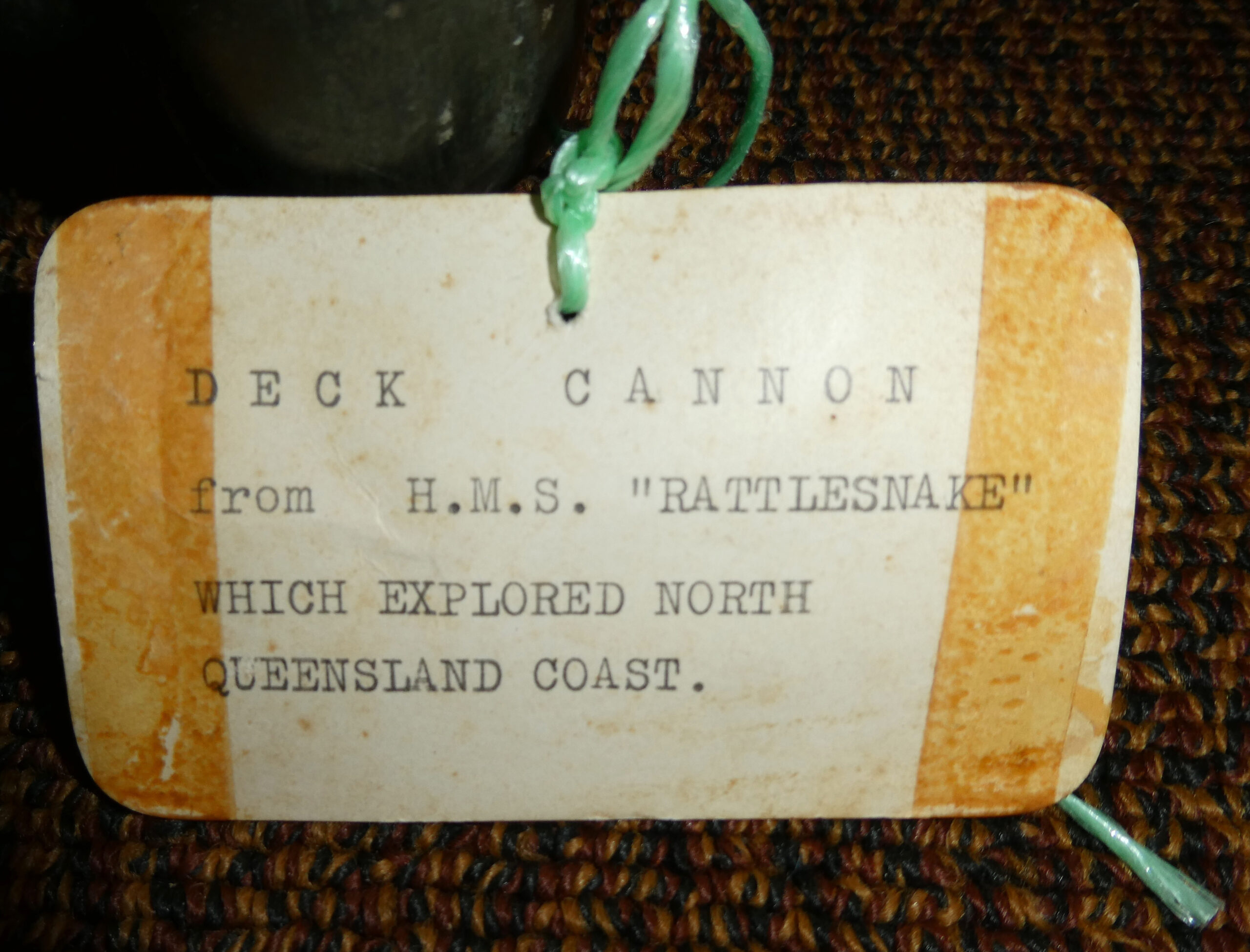
Swivel guns were being sold in Australian port cities for much of the nineteenth century, and colonial newspaper accounts describe these weapons being used against “the blacks” both by vessels sailing the Queensland coast (at the same time Rattlesnake was surveying the coast), and by Queensland pastoralists.3 While John McGillivray’s 1852 narrative, The Voyage of the Rattlesnake, makes no mention of swivel guns, that also remains a possibility.4
The gun’s likely connection with Francis Jardine and the Frontier Wars, and its possible association with HMS Rattlesnake indicate that this is potentially an item of both state and national significance.
(All images via Toowoomba Historical Society)
DOI: 10.17613/0k0xd-q6g61
——————————————————-
- 18 December 1864, Colonial Frontier Massacres
in Australia, 1788-1930 (University of Newcastle), https://c21ch.newcastle.edu.au/colonialmassacres/detail.php?r=1077
↩︎ - M.W.S., “With the Cape York Prospecting Party.-XVI,” The Queenslander, 31 July 1897, 222, https://trove.nla.gov.au/newspaper/article/24468402; https://nla.gov.au/nla.obj-1161132858/view?sectionId=nla.obj-4017821292&searchTerm=swivel+gun&partId=nla.obj-1314981569#page/n55/mode/1up/
↩︎ - Dr Cumbtae Stewart, “Dunk Island to Cape Grafton. Discovery and Exploration,” The Brisbane Courier, 7 February 1925, 19, https://trove.nla.gov.au/newspaper/article/20914955; “The Race War in Queensland,” The Bulletin 23, no. 1160 (10 May 1902), https://nla.gov.au/nla.obj-659135403
↩︎ - John Macgillivray, Voyage of HMS Rattlesnake, Vol 1 (London: T. & W. Boone, 1852), https://gutenberg.net.au/ebooks/e00031.html ↩︎