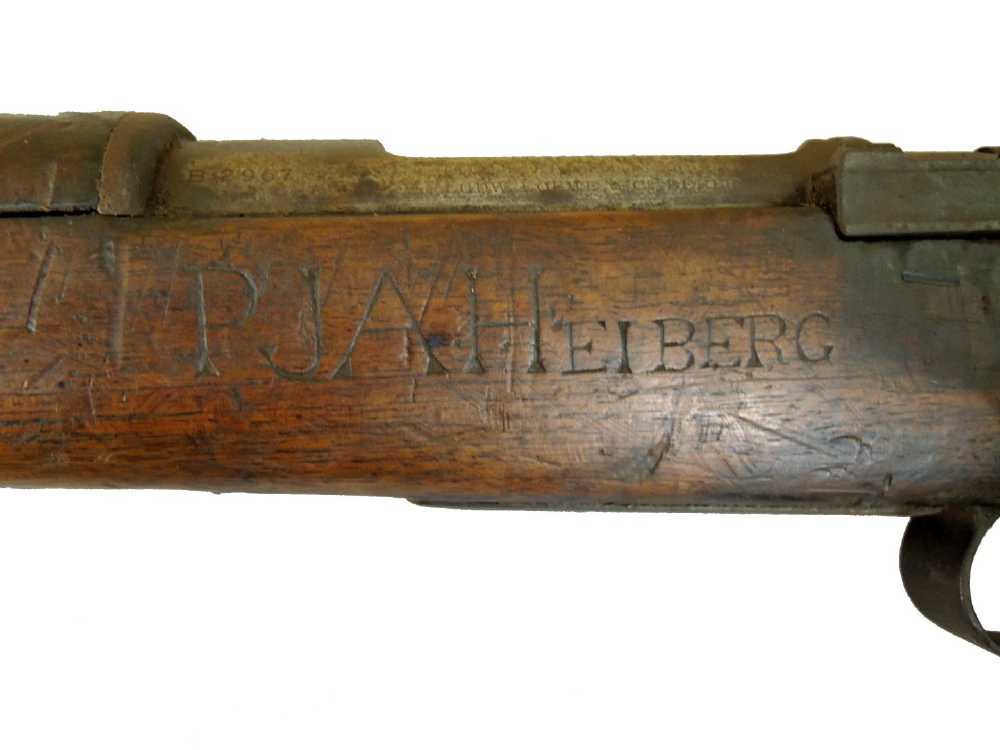
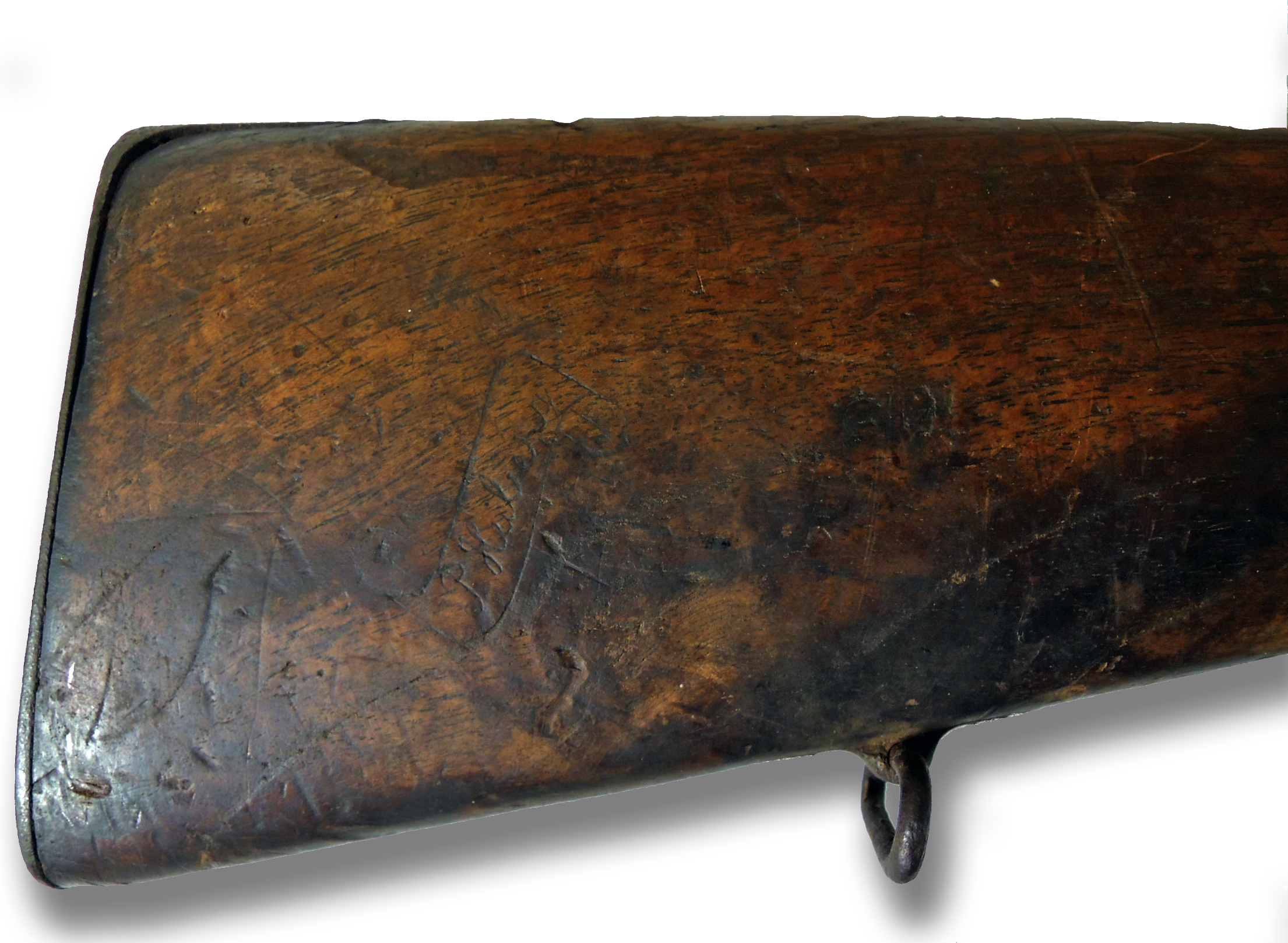
In a locked cabinet within a darkened storeroom, deep within the Queensland Museum there is a well worn Mauser M96 rifle with the name ‘P J A Heiberg’ crudely carved into its wooden stock. On the other side of the world, in a small-town cemetery in regional South Africa, there’s a nondescript grave marker similarly inscribed with the name ‘Petrus Johannes Adam Heiberg’.
Unlike most service men and women returning to Australia last century, after serving overseas, the nurses and soldiers who served in South Africa during the Boer Wars (1899 – 1902) often returned with captured enemy weapons as souvenirs.
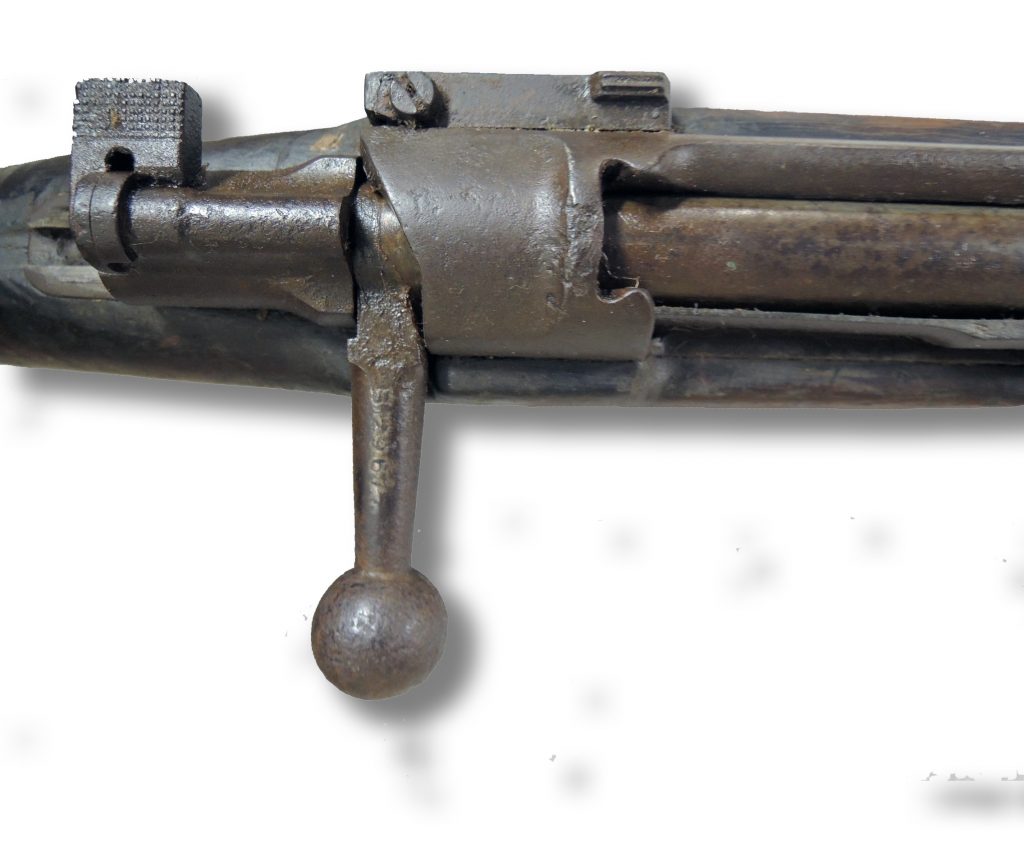
Describing the return of the Third Queensland Contingent in mid June 1901, the Brisbane Courier observed that ‘Every man seemed to possess some souvenir of South Africa’ and ‘That Mauser rifles were much in evidence as trophies of war.’ Around the same time, and following a request from the Queensland Premier, a case of captured Mausers was also consigned to the second contingent of the Queensland Mounted Infantry.
Souvenir Boer Mausers were so common in fact that for some years thereafter, many towns had war trophy displays featuring massed assemblages of captured weaponry.
In May 1906 for example the Townsville Bulletin described one such exhibit in the city’s Town Hall where ‘A rack of silky oak, prettily designed, and indicating thorough workmanship, has been erected on the east side wall opposite the table, to accommodate the 25 Mausers…. The stocks are cut, carved, and decorated in various ways, while every weapon shows signs of constant usage.’
By mid 1905 Queensland had been consigned at least 150 captured Mausers, a third of which were allocated to Rockhampton where the Mayor requested they be arranged ‘around the walls of the Council Chambers, somewhat out of reach of the more impulsive aldermen.’
What made the Boer Mausers particularly collectable – then as now – were their elaborately carved wooden stocks often adorned with patriotic motifs, together with the owner’s name or initials. Unlike the Australians serving in South Africa, each Boer soldier had to supply his own horse, rifle and ammunition. Consequently they were free to embellish their weapons, many of which are now highly sought after by public and private collectors.
It seems likely the Queensland Museum’s Mauser is one the many trophy weapons brought here either officially or privately, and although the exact circumstances of its capture were never recorded at the time of donation the weapon’s first owner, P J A Heiberg, did leave us one other important clue.
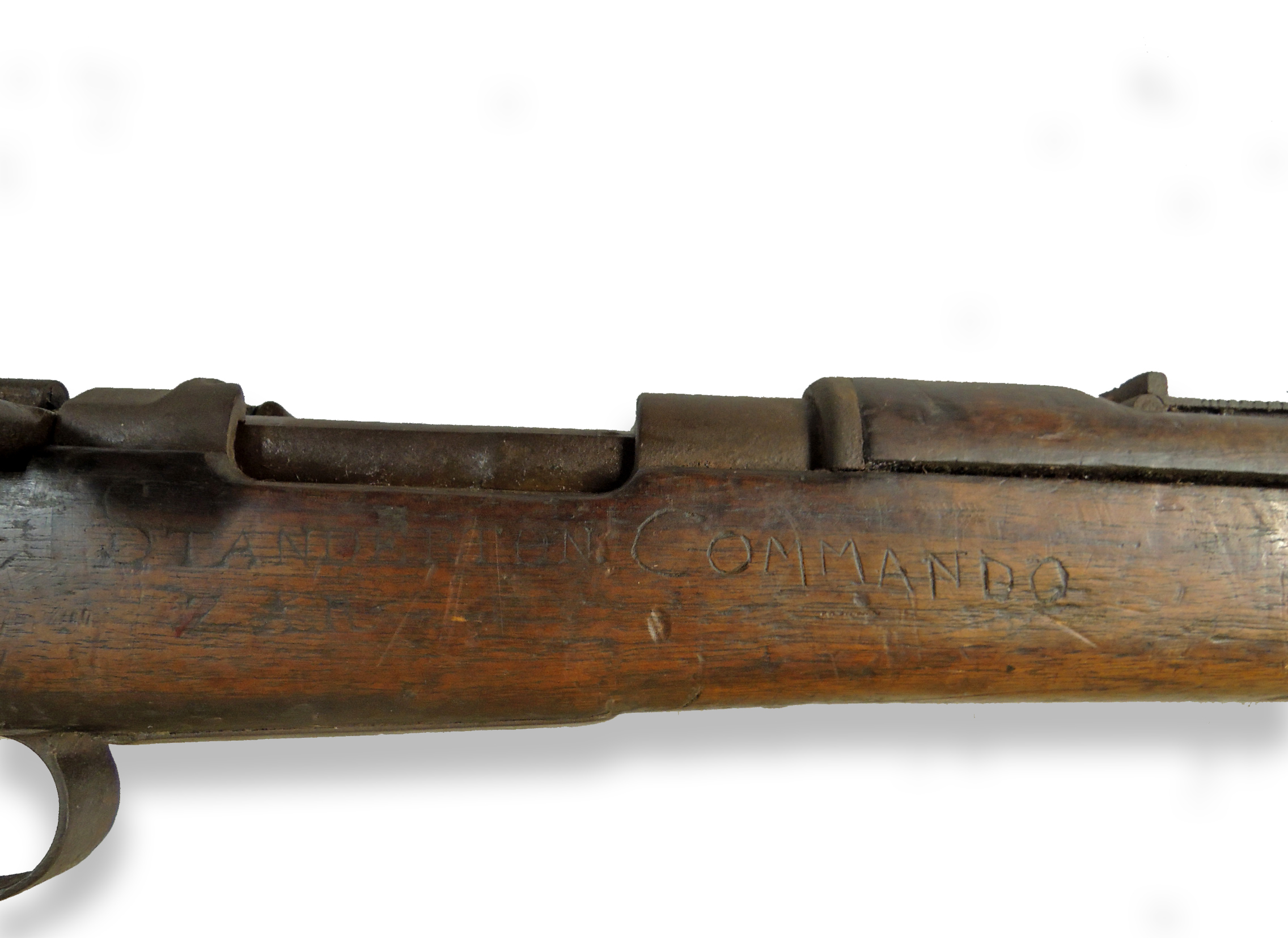
Also carved into the rifle’s bruised wooden stock are the words ‘Standerton Commando’, a reference to one of the many local commando units that made up the Boer Army. When circumstances demanded, Boers (also known as burgers or “citizens”) were expected to join commandos from their local municipalities or rural districts, this defensive system dating back to the Dutch settlement of the southern African continent in the 17th century.
Although there were three P J A Heiberg’s serving then with the Boer Army, only one of these (i.e. Petrus Johannes Adam Heiberg) is known to have also served with the Standerton Commando. The latter received the Lint voor Verwonding (wound ribbon) which, if he was captured at the time, might also help explain how his rifle subsequently became a souvenir.
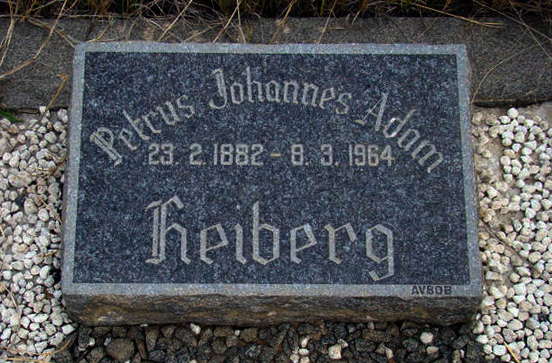
Australian Contingents were operating in the vicinity of Standerton, and are also known to have engaged with Standerton Commando forces. The South African town of Standerton, moreover, is only 55 kilometres to the north of Vrede where Petrus is thought to have lived (and was later buried).
Petrus survived the war and lived to a ripe old age, he and his descendants remaining oblivious that a Mauser bearing his name had also survived in a public museum 11,470 kilometres away. Which is perhaps just as well. Even if he had learned of its existence, would it have pleased him in any way to then learn that the rifle he had personally inscribed, which he had carried to war as a young man and which had no doubt saved his life on a few occasions, had remained hidden in a museum storeroom for all those decades – and would likely remain so?
Very interesting thank you.